Buffet Trolley Guide: Service Trolleys, Plate Racks and Banquet Carts

Choosing the right buffet trolley involves more than comparing prices. Hotels, banquet halls and catering businesses need to consider load capacity, trolley dimensions, materials, mobility, cleaning requirements and how each unit fits into daily service operations. The right equipment can help staff move food, dishes and supplies more efficiently while maintaining a clean and organized service area.
Quick answer: Choose a buffet trolley according to its load capacity, number of shelves, dimensions and wheel performance. For plate racks, check plate diameter, rack spacing and stability. For heated banquet carts, confirm the heating system, temperature control and electrical requirements. Before placing a bulk order, verify materials, construction quality, lead time, packaging and any required compliance documentation.
For commercial buyers, it is also important to distinguish between service trolleys, plate racks, banquet carts and related items such as bus tubs and trays. Each serves a different purpose, so selecting the correct combination helps avoid unnecessary costs and operational problems.
Bus Tub: What Hotels and Banquet Halls Should Compare Before Ordering
Bus tubs — sometimes written as bus tube or bussing tubs — are commonly used in hotels, restaurants and banquet halls to collect used dishes, transport tableware and organize dishwashing operations. Although they are not the same as a buffet trolley, they may be used alongside service trolleys as part of a complete foodservice workflow.
1. Material and Durability
Plastic bus tubs are widely used for collecting dishes and transporting kitchen supplies because they are relatively lightweight and easy to handle. Buyers should check the material specification, wall thickness, resistance to routine impacts and suitability for the intended cleaning process. For applications requiring metal equipment, confirm the stainless steel grade, surface finish and resistance to corrosion under the expected operating conditions.
2. Dimensions and Capacity
The dimensions of a bus tub should match the available storage space, dishwashing area and transport method. Oversized tubs may be difficult to handle when full, while undersized tubs may require more trips during busy service periods. Before ordering, measure the available space and consider the typical quantity of dishes or utensils handled during each service cycle.
3. Power and Temperature Requirements
Most conventional bus tubs do not require electrical power. If your project also includes heated banquet carts or other powered foodservice equipment, evaluate those products separately. For heated carts, confirm the rated voltage, frequency, power consumption, temperature-control method and applicable electrical requirements before finalizing the order.
4. Quantity Planning
Estimate purchasing quantities using actual operating requirements. A practical starting point is:
Required quantity = Daily operating requirement + Peak-service allowance + Replacement stock
For example, a high-volume bus tubs restaurant or banquet venue may need additional tubs and transport equipment during simultaneous events. Avoid ordering solely on the basis of total seating capacity.
How to Choose the Right Service Trolleys and Racks

A buffet trolley should support the way staff work, not simply fit the available space. Hotels and banquet halls may need different buffet trolley configurations for food replenishment, dish collection, plate storage, kitchen transport and event setup.
1. Identify the Main Application
- Service trolleys: Suitable for transporting dishes, utensils and supplies between preparation areas, kitchens and dining spaces.
- Plate racks and tray holders: Designed to organize plates or trays and help staff access tableware efficiently.
- Banquet carts: Used for specific banquet operations. Heated models may be required when food must be held at a controlled temperature.
- Bus tubs and trays: Used for collecting, holding or transporting dishes and supplies.
2. Compare Load Capacity and Dimensions
Check the maximum rated load, shelf capacity, overall dimensions and weight distribution. A buffet trolley that is suitable for light tableware may not be appropriate for heavy kitchen supplies. Consider the maximum expected load, whether it is distributed evenly across the shelves, and whether the buffet trolley can pass through kitchen doors, service corridors and elevators.
3. Select the Appropriate Number of Shelves
Two-tier and three-tier buffet trolleys are common options. A two-tier trolley may provide convenient access for larger items, while a three-tier design offers additional storage capacity within a similar floor footprint. For plate racks, check the diameter range of the plates and spacing between supports. For tray racks, verify tray dimensions, loading direction and compatibility with the trays used at your venue.
4. Evaluate Wheels and Maneuverability
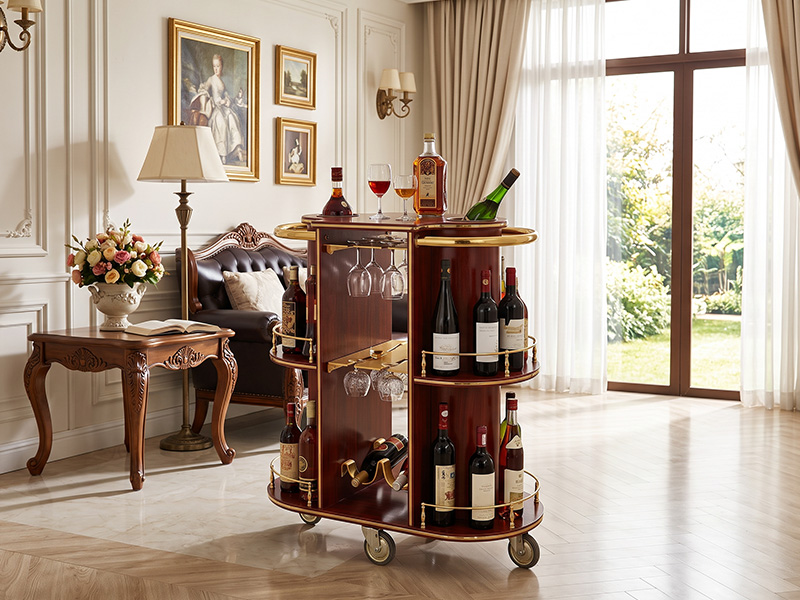
Consider wheel diameter, rolling resistance, floor material, swivel wheels for maneuverability, braked wheels for controlled positioning, noise during movement, and expected frequency of use and cleaning. For busy banquet operations, stable movement and easy positioning matter more than decorative features.
5. Consider Materials and Cleaning Requirements
Stainless steel is commonly selected for commercial foodservice equipment for its durability and clean appearance. Confirm the material grade, sheet thickness, weld quality, edge finishing and surface treatment. For plastic tubs and accessories, review the material specification and suitability for the intended cleaning and handling conditions.
Rack Pans, Tubs and Trays: Specs, Materials and Lead Time
Rack pans, tubs and trays serve different functions across commercial kitchens and buffet operations. The term "rack pan" may refer to different products depending on the supplier. Provide a reference photo, drawing or product code whenever possible to avoid misunderstandings.
| Specification | What to confirm | Why it matters |
|---|---|---|
| Dimensions | Length, width, height and usable capacity | Ensures compatibility with storage and working areas |
| Material | Stainless steel, plastic or another specified material | Affects durability, weight and maintenance |
| Thickness | Actual material thickness where applicable | Helps buyers compare construction and performance |
| Construction | Welds, joints, edges and reinforcement | Influences stability and long-term use |
| Surface finish | Polished, brushed or another specified finish | Affects appearance and cleaning |
| Compatibility | Rack, tray, trolley or storage-system dimensions | Helps prevent fit and handling problems |
| Packaging | Protective materials, carton size and packing method | Reduces the risk of transit damage |
| Lead time | Sample, production and shipping preparation time | Supports purchasing and project scheduling |
Buss Tubs Checklist Before You Place a Bulk Order
Before purchasing service trolleys, plate racks, buss tubs or related equipment in bulk, review the following checklist.
1. Confirm Product Specifications
Prepare a written specification sheet covering dimensions, material, thickness, finish, load capacity and intended use. For plate racks, specify the plate diameter range and rack capacity. Do not rely on product names alone.
2. Check Welding, Edges and Surface Finishing
For stainless steel buffet trolleys and racks, inspect the quality of welds, joints, corners and edges. Check whether the buffet trolley moves smoothly, remains stable under load and has securely fitted wheels and handles.
3. Verify Compliance Documentation
Explain the destination country and application to the supplier, and request the relevant material declarations, test reports or certificates. NSF and FDA requirements may apply to specific food-contact products, but neither is a universal requirement for every trolley, rack or bus tub.
4. Review Packaging and Container Loading
Ask how products will be protected against scratches, dents and movement during transportation. For larger orders, request estimated carton dimensions, gross weight and packing details.
5. Confirm Sample Approval and Production Consistency
When the order involves customization or a large quantity, approve a representative sample before mass production. For repeat orders, maintain an approved reference sample to reduce variation between batches.
6. Confirm MOQ, Payment Terms and Delivery Schedule
Ask the supplier to specify the minimum order quantity, sample charges, customization costs, production lead time and payment terms. Confirm how design changes may affect cost and delivery time.
Cost Breakdown: What Determines the Price of Service Trolleys and Racks?
The purchase price of a buffet trolley or service rack reflects more than raw material cost. Main cost components include:
- Materials: Stainless steel, plastic, wheels, handles, fasteners and other components.
- Labor: Cutting, forming, welding, assembly and other manufacturing processes.
- Surface finishing: Grinding, polishing, brushing and protective treatment.
- Components and assembly: Wheel systems, brakes, shelf supports and structural reinforcement.
- Packaging: Protective materials, cartons and custom packaging.
- Logistics: Domestic transportation, export handling, freight and other charges.
Factory-Direct Supply vs. Trading Company Supply
| Comparison factor | Factory-direct supplier | Trading company |
|---|---|---|
| Pricing structure | May offer more direct visibility into manufacturing costs | May include sourcing and service margins |
| Customization | Can coordinate directly with production | Depends on manufacturing partners |
| Product range | Depends on the factory's own capabilities | May combine products from multiple manufacturers |
| Production communication | Direct access to manufacturing details | May pass through an account manager |
| Quality control | Depends on the factory's inspection system | Depends on supplier selection |
| Lead time | Depends on capacity, materials and complexity | Depends on partner factories and coordination |
| After-sales support | Depends on the factory's service arrangements | Depends on its service team and agreements |
The most useful comparison is based on verified specifications, total landed cost, delivery reliability and the support available after delivery. For a deeper method, see our guide on evaluating a buffet equipment supplier.
Why PYEIN Is a Trusted Supplier of Buffet Trolleys, Service Trolleys and Racks

PYEIN focuses on buffet equipment and buffet space solutions for hospitality and catering applications. Its approach combines product selection, customization coordination and project-oriented support to help buyers identify equipment that fits their operating needs.
For projects involving multiple buffet equipment categories, buyers can review the broader buffet station product catalog to explore relevant product options.
How PYEIN Tests Service Trolleys and Racks Before Shipping
Product quality is evaluated against confirmed specifications and the intended application, including dimensional checks, visual inspection, assembly checks and functional testing.
Dimensional / Material / Assembly / Functional / Packaging Inspection
Verify main dimensions against the approved drawing, inspect material and finish consistency, check that handles, shelves and wheels are securely fitted, move the trolley over a test surface to assess rolling and braking, and confirm protective packaging is appropriate for the product's finish and shipping method.
FAQ: Buffet Trolley and Service Trolley Purchasing
What Is the MOQ for Buffet Trolleys? The minimum order quantity depends on the product model and customization requirements. Provide the preferred model, estimated quantity and dimensions so that the applicable MOQ can be confirmed.
How Long Does It Take to Produce Service Trolleys and Racks? Lead time depends on product availability, order quantity, material supply and customization. Custom products may require additional time for drawing confirmation and sample approval.
Can I Request a Sample Before Placing a Bulk Order? Existing models may be easier to sample than products requiring a new design. Confirm the sample price, shipping cost and preparation time.
What Should I Check Before Buying a Buffet Trolley? Check the intended application, load capacity, dimensions, shelf configuration, wheel type, material, surface finish and ease of cleaning.
Are NSF or FDA Documents Required? Requirements depend on the product, intended use, destination market and applicable regulations. Explain the intended use and destination country to the supplier, then verify the applicable documentation.
Can PYEIN Provide Customized Service Trolleys or Racks? Customization feasibility depends on the product design and order quantity. Provide drawings or reference photographs, dimensions and material preferences.
Choosing the right service trolley, plate rack or banquet cart starts with a clear understanding of your workflow and space. Contact us to discuss your project, request a quotation and confirm specifications, customization options and delivery schedule.
Request a Free QuoteRelated Guides
- Food Heat Lamp Guide — choosing heat lamps for carving stations and buffets