Stainless Steel Chafing Dish Guide: Materials, Finishes and Durability Compared
Choosing the right stainless steel chafing dish involves more than comparing appearance and price. For hotels, caterers, and hospitality equipment buyers, material grade, sheet thickness, surface finish, welding quality, and documented material traceability all influence long-term performance. A well-selected chafing dish should suit the serving environment, withstand repeated commercial cleaning, and maintain a professional presentation throughout daily service.
For frequent hotel and catering use, a stainless steel chafing dish made from grade 304 is generally the preferred option when corrosion resistance is a priority: grade 304 typically contains 8-10.5% nickel and 18-20% chromium, against roughly 3.5-5.5% nickel and 16-18% chromium in grade 201. The grade claim should be supported by a mill test certificate matching the delivered batch.
That composition gap explains why 201 stainless steel may suit budget-conscious applications under appropriate operating and maintenance conditions, while the final decision should still rest on the complete product specification: the grade of every wetted part, the sheet thickness, the finish, the certificate pack, and the total cost of ownership. This guide works through those five checks in that order.

Stainless Steel Chafing Dishes: What Hotels and Caterers Should Compare Before Ordering
Most purchasing disputes on stainless steel chafing dishes are not about shape or capacity: they are about what the steel actually is. Buyers should work through five groups of evidence in sequence, starting with the material itself and ending with the total delivered cost.
1. Material grade: what 201 and 304 really differ on
Both grades appear in catering equipment, but their compositions diverge in the way that matters most after years of washing. Grade 304 carries a higher nickel content in a chromium-nickel composition, while grade 201 uses less nickel and leans partly on manganese. Repeated exposure to moisture, food residue, cleaning chemicals, and inadequate drying is where that difference becomes visible.
| Comparison factor | 201 stainless steel | 304 stainless steel |
|---|---|---|
| Typical nickel content | 3.5-5.5% | 8-10.5% |
| Typical chromium content | 16-18% | 18-20% |
| Material cost | Generally lower | Generally higher |
| Corrosion resistance | Lower under many service conditions | Generally better |
| Repeated commercial cleaning | Requires disciplined cleaning and drying | Generally better suited to demanding routines |
| Documentation to request | Composition report for the delivered batch | Composition report for the delivered batch |
| Typical purchasing consideration | Budget-sensitive applications | Frequent professional use |
Composition ranges are typical values for the grades commonly used in catering equipment. Buyers should confirm the actual material certificate for each order rather than relying on the grade name alone.
Neither grade is immune to corrosion. Chloride-containing cleaners, salt deposits, prolonged moisture, and unsuitable maintenance damage either material, so confirm the grade of each component separately instead of assuming that a complete unit uses one steel throughout. In practice, the body, lid, water pan, and food pans are the parts worth specifying individually.
2. Sheet thickness and construction quality
Two units can carry the same grade and still differ in how long they survive a banquet season. Sheet thickness, weld quality, and the fit of moving parts decide how a unit behaves after repeated heating, refilling, and washing cycles.
- Sheet thickness: request the nominal thickness for the body, lid, water pan, and food pans, and state the tolerance accepted in the agreement. Thin stock dents and distorts sooner under daily handling.
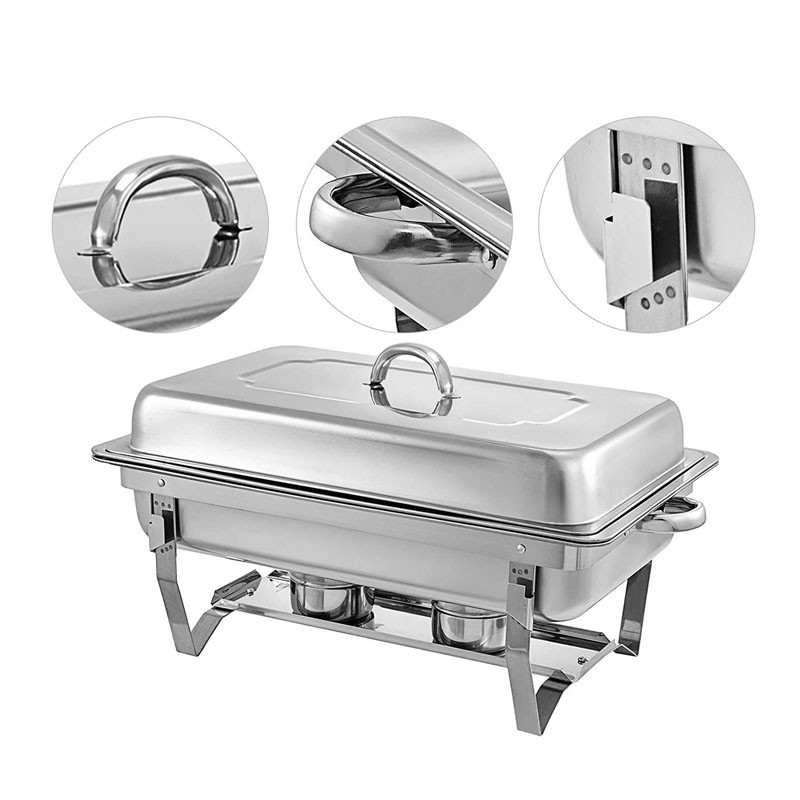
- Welds and joints: look for consistent bead, no pinholes or burn-through, and finishing that leaves no crevice where residue collects.
- Lid mechanism and hinges: check attachment points, alignment, and resistance across a full open-and-close cycle.
- Frame and base: confirm the unit sits level and stays stable under a loaded pan.
- Pan compatibility: verify that supplied and replacement pans match the frame and lid dimensions.
These checks matter most when buying stainless steel chafing pans, stainless steel chafer pans, or complete sets for several buffet stations. Confirm whether the supplier offers stainless steel chafer pans as standalone replacement items, because pan dimensions, usable depth, and rim design differ between models and cannot be assumed to interchange.
3. Surface finish and how it ages
The finish decides how a unit reads under buffet lighting, and it also decides how much of the daily cleaning effort stays visible on the surface.
| Surface finish | Appearance | How it behaves in service |
|---|---|---|
| Mirror polish | Highly reflective and formal | Premium presentation, but fingerprints and fine scratches are more visible |
| Brushed finish | Subtle directional texture | Marks blend into the grain, so day-to-day wear is less obvious |
| Satin finish | Soft, restrained sheen | Even appearance across a long buffet line; tolerant of routine handling |
When evaluating a stainless chafer or a brushed stainless steel chafer, inspect consistency across the lid, body, handles, and frame rather than judging a single panel. Uneven polishing, sharp edges, visible scratches, and poorly finished joints undermine an otherwise sound product. Ask for the manufacturer's recommended cleaning instructions as well, and avoid assuming that every polished surface performs identically under the same commercial cleaning regime.
4. Certificates, declarations and traceability
A grade claim is only as strong as the paperwork behind it. Before confirming an order, establish which documents apply to the exact product and destination market, and who issues them.
- Mill test certificate: identifies the steel grade, heat number, and chemical composition of the batch used.
- Component-level declaration: states the grade of the body, lid, water pan, and food pans separately where they differ.
- Food-contact documentation: covers the materials that touch food, which is a separate question from product certification.
- Market-specific requirements: vary by destination, product design, and materials, so confirm them per project rather than assuming portability.
NSF and FDA should not be treated as interchangeable terms. FDA requirements and guidance may apply to food-contact materials, while NSF standards and certification programs cover specified product categories. A unit should not be described as NSF-certified or FDA-approved unless the claim is supported by documentation that names the product being purchased.
5. Where the quotation difference actually comes from
Two quotations for the same-looking product rarely differ because one supplier is generous. The gap is usually traceable, and it is worth asking which of these lines changed.
- Raw material: grade and sheet thickness drive the largest share of the difference.
- Forming, welding and assembly: more components and tighter tolerances mean more labour.
- Polishing and surface treatment: a uniform mirror finish costs more than a satin or brushed pass.
- Accessories and component assembly: water pans, fuel holders, and dividers are often quoted separately.
- Individual packaging and export cartons: protection for polished surfaces adds cost that cheap packing does not absorb.
- Inspection, documentation and logistics: certificates, inspection records, and freight terms belong in the comparison.
Material grade, steel thickness, product dimensions, construction complexity, finish requirement, and order quantity all move the number. Compare equivalent specifications before concluding that one supplier offers a better price, and ask for the quotation to name the grade and thickness explicitly.
6. Capacity and heating system as a specification, not a headline
Capacity and heating are specification decisions, but they follow the material choices above rather than leading them. Confirm food pan dimensions and usable depth, the number and arrangement of pans, the space needed for lid opening and staff access, and compatibility with the specified fuel or electric system.
Two products with similar outer dimensions may differ in usable pan depth, so compare the pan size chart instead of the shell alone. For pan formats, footprints, and capacity charts across configurations, see the chafing dish sizes guide. Fuel-heated and electric models also carry different installation, clearance, and maintenance requirements, so compare the running cost and service conditions of electric chafing dishes before standardising a fixed station (that comparison article is pending publication).
How to Choose the Right Chafing Dishes for Hotels and Caterers
The most suitable chafing dishes match the service environment, the expected frequency of use, the presentation standard, and the purchasing budget. Working through the four steps below in order keeps the specification defensible.
Step 1: Match the material to the operating environment
For high-frequency hotel service, repeated cleaning, and long-term professional use, 304 stainless steel is generally worth considering because of its improved corrosion resistance. For occasional events or cost-sensitive projects, 201 stainless steel may be an option if its specifications suit the operating conditions and the buyer accepts the associated maintenance requirements. Ask the supplier to identify the grade used in the body, lid, water pan, food pans, and frame, and to confirm which of those components differ.
Step 2: Select the right size and configuration
Estimate the amount of food served at peak periods, the number of menu items, and how frequently staff can replenish each unit. A practical purchasing calculation is:
Required units = number of servings at peak demand ÷ practical servings per unit
Round up to a whole number, then account for menu variety, replenishment intervals, and service layout. Practical servings per unit must be established from the actual menu and product configuration rather than from pan volume alone. For larger projects, a buffet station product catalog helps buyers compare equipment options and plan a consistent presentation across several serving areas.
Step 3: Choose the finish for your buffet concept
Mirror-polished stainless steel may suit formal hotel dining and premium event presentation, while brushed and satin finishes suit contemporary buffet concepts. When ordering multiple units, check consistency across the complete order, because differences in reflectivity, grain direction, or polishing quality become more noticeable when products are displayed together.
Step 4: Evaluate the complete cost, not just the unit price
A low purchase price does not automatically represent the best value. Compare material specification, sheet thickness, construction, included accessories, packaging, expected maintenance, and replacement-part availability. For international orders, also review carton dimensions, gross weight, loading arrangements, shipping terms, and the potential cost of damaged products, because these details materially affect the total landed cost.
Stainless Steel Chafing Dish and Chafing Dish Stainless Steel: Specs, Materials and Lead Time
The phrases "stainless steel chafing dish" and "chafing dish stainless steel" describe the same product category. In purchasing documents, however, the product name alone does not establish whether two products are equivalent, so the specification has to be written out line by line.
| Specification | What buyers should confirm |
|---|---|
| Material | Stainless steel grade for the body, lid, water pan and each food pan |
| Sheet thickness | Nominal thickness per component, plus the accepted tolerance |
| Dimensions | Overall dimensions, food pan dimensions, usable depth |
| Capacity | Pan configuration and intended serving application |
| Finish | Mirror polish, brushed, satin, or another specified finish |
| Heating system | Fuel or electric, including applicable operating requirements |
| Certificates | Mill test certificate and food-contact documentation as applicable |
| Accessories | Included pans, water pans, fuel holders, other components |
| Packaging | Individual protection, carton dimensions, export packing |
| Lead time | Sample, production, and estimated shipping schedule |
Lead time depends on stock availability, order quantity, customisation, material sourcing, and production scheduling. Custom finishes, revised dimensions, logo applications, and special packaging may require additional time. For bulk purchases, obtain a written quotation that identifies the model, approved specifications, order quantity, packaging requirements, and estimated delivery schedule.
Stainless Steel Chafing Dish Buffet Set Checklist Before You Place a Bulk Order
A stainless steel chafing dish buffet set may include the main chafer, food pans, water pan, lid, frame, and heating accessories, depending on the model. Confirm exactly what is included, and which grade applies to each part, before comparing prices — see the stainless steel chafing dish buffet set range for reference configurations.
1. Lock the specification and the certificate pack
Request a specification sheet that identifies the material grade per component, sheet thickness, dimensions, finish, included components, and heating requirements, and attach the mill test certificate and food-contact documentation that will accompany the shipment. Statements such as "premium stainless steel" should be replaced with the grade and the certificate reference before the deposit is paid.
2. Inspect workmanship and finish against that specification
Before approving a sample or bulk order, check consistent polishing, secure handles and hinges, smooth edges, stable frames, correct alignment, and proper fit between the lid, body, and food pans. Also verify the sheet thickness at the points where the product is handled most. A pre-production sample establishes the acceptance standard for subsequent production.
3. Review packaging and container loading
Export packaging should protect polished surfaces, corners, handles, and hinges during handling and transport. Request details on individual product protection, carton dimensions, gross weight, carton quantity, and loading arrangements, then confirm the packing plan and container utilisation for large shipments.

Factory direct vs. trading company: price and lead time
The purchasing route influences communication, customisation coordination, and order management, but factory-direct purchasing does not automatically guarantee the lowest price or shortest lead time.
| Comparison factor | Factory-direct supplier | Trading company |
|---|---|---|
| Manufacturing communication | May provide direct access to production and engineering teams | May coordinate requirements between buyer and factory |
| Material traceability | Certificates can usually be traced to the production batch | Depends on how the sourcing partner passes documentation through |
| Customization | Convenient when the required manufacturing capability exists | Depends on its factory network and coordination |
| Quotation structure | May give a more direct view of manufacturing-related cost | May include sourcing and coordination cost |
| Lead time | Depends on capacity, materials, schedule, customisation | Depends on the intermediary and the actual factory |
| Quality control | Verified through documented inspection procedures | Verified through supplier oversight and inspection |
Whichever route is used, request a written quotation, confirmed specifications, a production schedule, and a clear quality-inspection arrangement.
Three common chafing dish configurations compared
| Configuration | Typical application | Main purchasing consideration |
|---|---|---|
| Standard single-pan chafing dish | Breakfast buffets, restaurants, routine catering | Straightforward setup and replenishment |
| Multi-pan or divided configuration | Buffets offering several dishes or side items | Menu flexibility and pan compatibility |
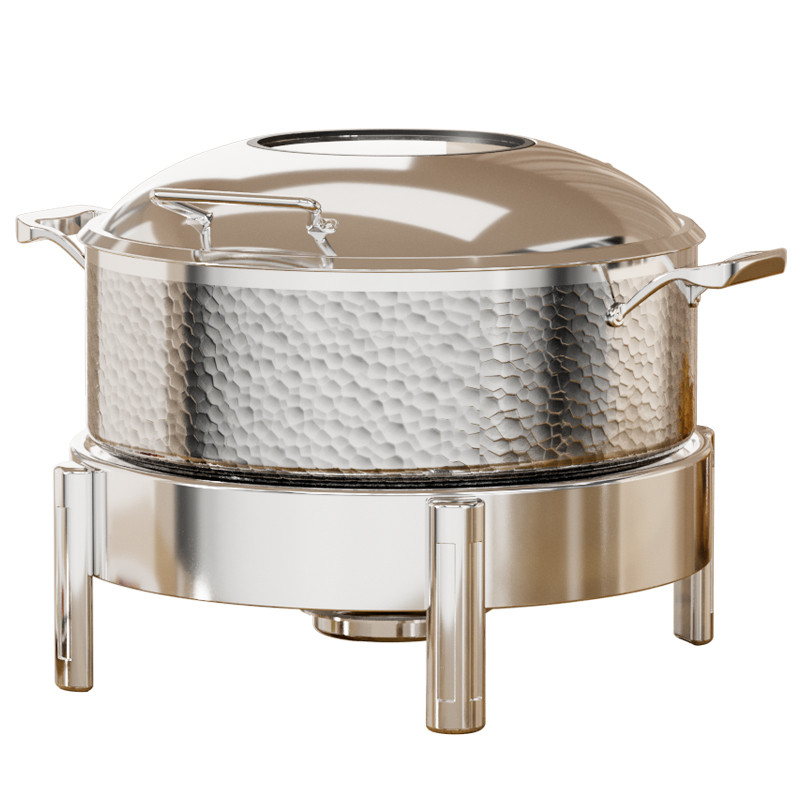
| Chafing dish with glass lid | Service environments where food visibility matters | Glass thickness, frame grade, hinge design, replacement parts |
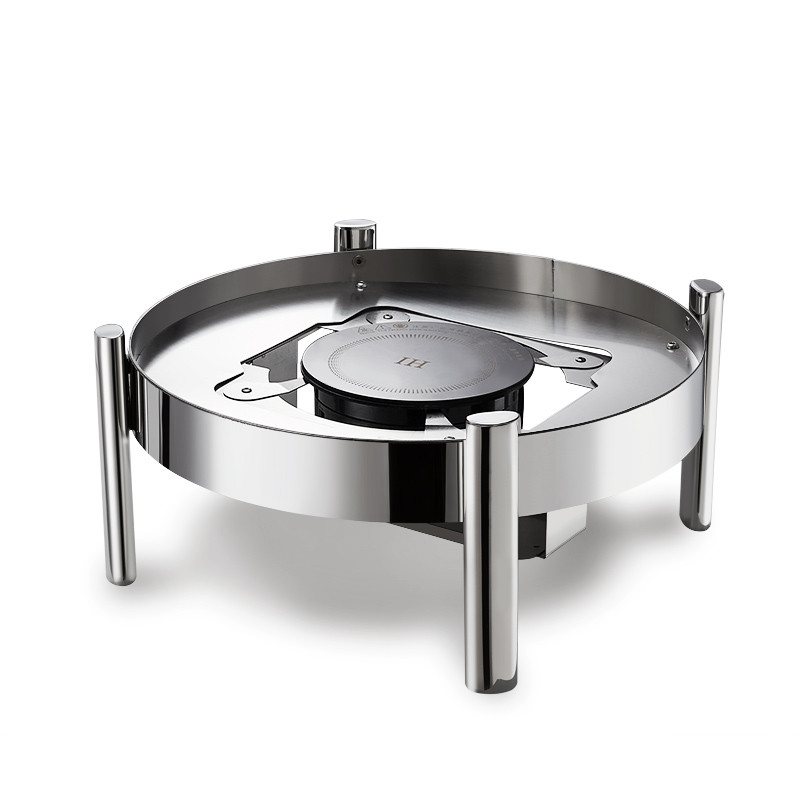
A chafing dish with glass lid makes displayed food easier to see while keeping the lid in place during service. Buyers should assess glass thickness and construction, the grade of the stainless steel frame and hinge, cleaning requirements, and the availability of replacement components.
How PYEIN Tests Chafing Dishes Before Shipping
Material claims are only useful if they can be verified against the batch that actually ships. PYEIN aligns pre-shipment verification with the agreed specification, with the material documentation treated as part of the product rather than as an afterthought.
- Mill test certificate: grade, heat number, and chemical composition recorded for the steel batch used in the order.
- Grade spot check: a portable analyser reading taken on finished parts to confirm the delivered composition matches the certificate.
- Sheet thickness measurement: gauge readings at the body, lid, water pan, and food pans against the agreed nominal thickness.
- Weld and joint integrity: inspection of bead consistency, water-pan joints, and crevices that would trap residue.
- Food-contact documentation: the applicable material statements assembled for the destination market.
- Batch traceability: marking that lets a buyer connect a delivered unit back to its certificate and production record.
- Record pack: the inspection record and photographs issued with the shipment documents.
Buyers should ask which checks are actually performed, what acceptance criteria apply, and whether an inspection record is issued. Specific test methods, sampling rates, and certification claims should be confirmed in writing for the project rather than assumed.
Why PYEIN Is a Trusted Supplier of Chafing Dishes
Supplier selection involves more than the product itself: buyers also need clear communication, reliable specification management, and documentation that survives an audit. PYEIN provides buffet equipment solutions for hospitality and catering applications.
Product selection support
Compare dimensions, configurations, finishes, and intended applications before confirming a model, so the equipment aligns with the menu, serving workflow, and buffet layout.
Material and documentation clarity
Grade, sheet thickness, and finish are stated per component, with the applicable certificate pack identified before the order is confirmed.
Customization coordination
For customised finishes, dimensions, branding, or packaging, confirm which options apply to the selected product and approve drawings or written specifications before production.
Project and catalog coordination
For projects across several buffet equipment categories, coordinate product selection with the overall serving layout and equipment requirements.
Start with the buffet station product catalog to compare buffet station options, and use the modular buffet system planning guide to expand a station layout as cover counts grow (that article is pending publication). Before placing a bulk order, confirm the capabilities, documentation, inspection arrangements, and delivery terms that apply to your project.
Frequently Asked Questions About Stainless Steel Chafing Dishes
What grade of stainless steel does a stainless steel chafing dish use, and how do I verify it?
Professional catering units are commonly supplied in grade 304 for corrosion resistance or grade 201 for cost-sensitive programmes. Verify by asking for the mill test certificate covering the steel batch, then check the composition reading on finished parts against it. The grade name in a catalogue is not verification on its own.
How thick should the steel be on a stainless steel chafing dish?
Thickness requirements depend on the component and the handling intensity. Specify nominal thickness separately for the body, lid, water pan, and food pans, state the tolerance you will accept, and have it measured on the sample. Thinner stock distorts sooner under daily refilling and washing.
Which surface finish lasts best on a stainless chafer?
There is no single best finish, but there is a best match. Mirror polish gives the most formal presentation and shows marks fastest; brushed grain hides everyday wear; satin holds an even appearance across a long buffet line. Decide by how the unit is cleaned and how closely units sit together in service.
Is a first street stainless steel chafer the same as an OEM model?
Not necessarily. A first street stainless steel chafer belongs to one specific product line with its own grade, thickness, pan configuration, and finish, so it should not be treated as interchangeable with an OEM stainless chafer or another supplier's model without checking the specification. If you are matching that configuration, provide pan dimensions, lid type, finish, and grade, and confirm whether stainless steel chafer pans and other components are available as replacements.
Are stainless steel chafer pans supplied in the same grade as the body?
Not automatically. Some suppliers use the same grade throughout, others use a different grade or thickness for the food pans. Ask for a component-level declaration covering the body, lid, water pan, and each pan, because the food pans take the heaviest wear and the most contact with acidic menu items.
Does a chafing dish with glass lid use the same stainless steel frame?
It should be stated explicitly. A chafing dish with glass lid carries the same corrosion considerations on its frame, hinge, and body, plus the glass and hinge assembly as additional wear points. Confirm the frame grade, glass thickness, and the availability of replacement hinges before ordering.
What are the MOQ, lead time and sample policy for a stainless steel chafing dish buffet set?
All three depend on the model, stock availability, customisation requirements, and supplier terms, so ask for them for the exact configuration rather than as a general figure. Request separate estimates for sample and bulk production, confirm whether the quoted schedule includes packaging and dispatch, and confirm whether sample approval is required before mass production begins.
How are NSF, FDA and material certificates provided for stainless steel chafing dishes?
Ask the supplier to identify the specific product, the materials involved, and the requirements that apply to your destination market, then provide documentation naming that product. Mill test certificates, food-contact statements, and NSF or FDA documentation answer different questions, and a generic material certificate does not establish NSF certification or FDA approval for a complete unit.
Request a Free Sample and Quote from PYEIN
Choosing the right stainless steel chafing dish starts with a specification you can verify: grade and thickness per component, finish, certificate pack, pan dimensions, and packaging. Compare those before committing to a bulk purchase.
Share your intended application, preferred configuration, estimated quantity, and customisation requirements, then request a chafing dish sample and quote from the PYEIN team. Ask for drawings or written specifications for approval, and for the certificate pack that will travel with the shipment, before production begins.